The short answer is no. The longer answer is that the question itself is the wrong frame -- and the Scrum Masters who are asking it rather than acting are already behind.
AI will not replace Scrum Masters. It will automate significant portions of what Scrum Masters currently spend their time on. The role that survives will look different from the role that exists today, and the transition is already underway.
What AI Is Actually Doing to Scrum Ceremonies
Ceremony scheduling, agenda preparation, and standup facilitation -- the mechanical overhead of running Scrum events -- are already being handled by AI tools in forward-leaning teams. Tools like AI meeting assistants transcribe retrospectives, extract action items, and surface impediment patterns across sprints.
Sprint metrics that a Scrum Master previously compiled manually -- velocity trends, sprint predictability, cycle time distributions -- are generated automatically by AI-enhanced project management platforms.
This is not hypothetical. It is happening now, with tools that are readily available and increasingly embedded in the platforms teams already use.
For Scrum Masters who spend the majority of their time on logistics, facilitation mechanics, and metrics reporting, AI is a direct productivity replacement for a significant portion of that work.
What AI Cannot Do
The Scrum Master work that AI cannot replicate is the work that requires reading human dynamics and acting on them.
Coaching a team through a conflict between two developers who have fundamentally different working styles. Helping a Product Owner who is stuck between stakeholder pressure and team capacity constraints make a principled decision rather than a desperate one. Identifying that a team's sprint predictability problem is actually a trust problem -- that team members are not being honest about their capacity estimates because they are afraid of looking slow.
These are human problems. They require observation, relationship, and judgment accumulated over time. AI tools can surface signals. They cannot do the thing that matters most: act on the signal in a way that changes how people behave.
The Scrum Master work that compounds -- building psychological safety, developing team capability, reducing systemic impediments that sit in organisational structure rather than team process -- is the work AI cannot substitute.
What the Scrum Masters Who Will Thrive Are Doing
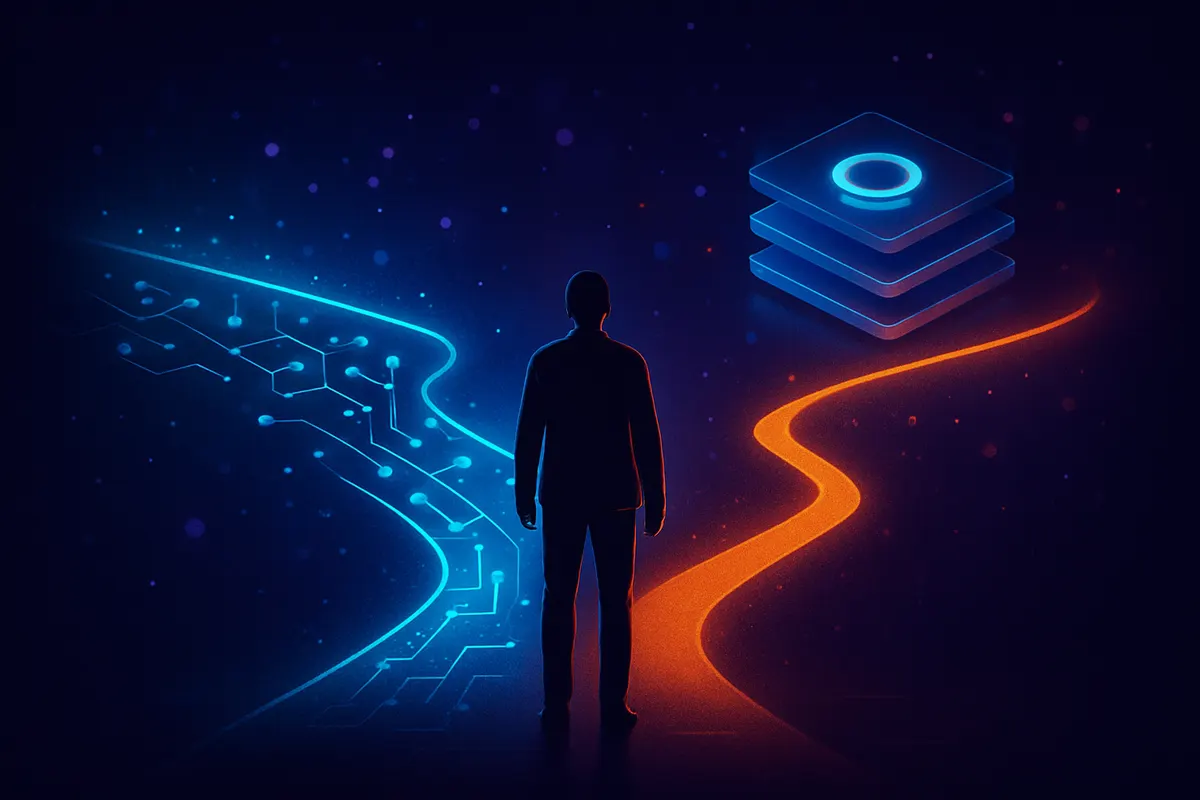
The Scrum Master role that survives AI automation is closer to an agile coach and organisational change agent than to a ceremony facilitator.
Scrum Masters who will be in demand five years from now are:
Developing deeper coaching capability. Understanding psychological safety, team dynamics, conflict resolution, and individual development as distinct skills rather than general "people skills."
Working at the organisational level. The impediments that most damage team performance are not in the team -- they are in the organisation's structure, priorities, and culture. Addressing those requires influence at a level that most Scrum Masters have not yet built.
Learning AI tools fluently. Scrum Masters who understand what AI tools can and cannot measure become better equipped to interpret the data and coach teams on what it means -- rather than spending time producing the data themselves.
Expanding their delivery knowledge. Pure Scrum expertise is narrowing in value as organisations use hybrid approaches. Scrum Masters who understand Kanban flow metrics, SAFe coordination, and product management practice are more durable.
What to Do Now
If you are a Scrum Master, the practical question is not whether AI will replace you. It is: which parts of my current role could be automated, and what would I do with the time if they were?
The answer to that question is your development roadmap.
Subscribe to Agile Pulse for practical Agile and AI guidance for practitioners navigating real delivery environments.